First Party Ad Tracking Setup That Holds Up
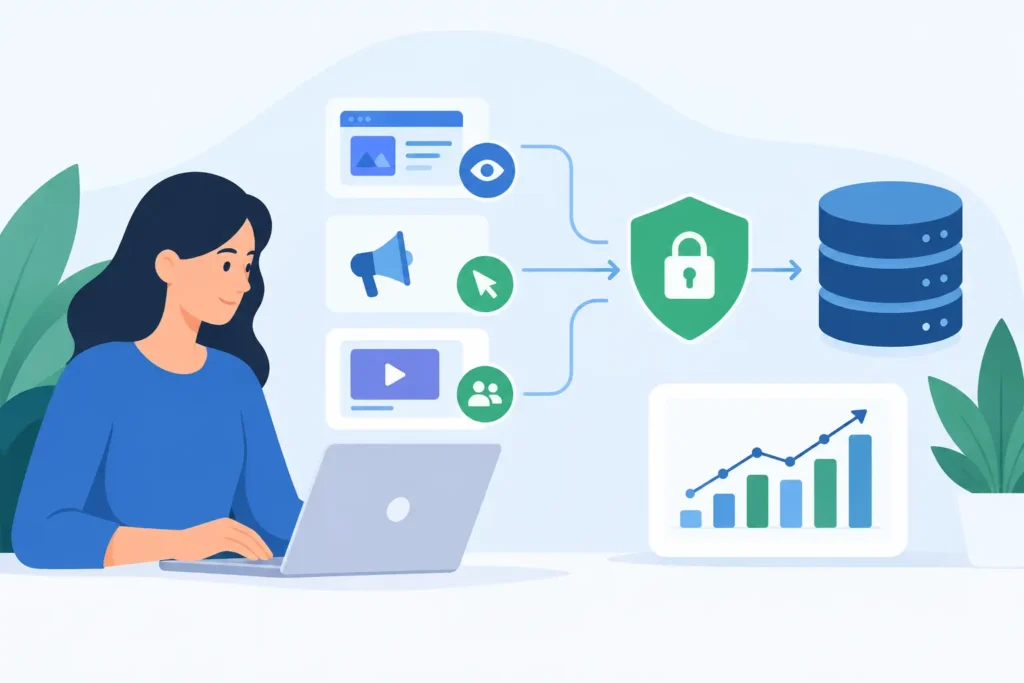
A customer might click a Meta ad on a phone, search for the business later on a laptop, and purchase after a sales call. Different systems may assign different credit to that journey, or leave parts of it unattributed. A first-party measurement setup can help preserve some relevant evidence, but it cannot reliably identify every cross-device path or prove which campaign caused the sale.
This is not another dashboard that repeats whatever the ad platforms say happened. It is the tracking layer underneath them: a system you control that records the click, preserves the attribution data, connects it to the conversion, and sends clean conversion signals back where they can improve optimization.
Why platform reporting cannot be your source of truth
Ad platforms are built to sell ads and optimize delivery inside their own ecosystems. Their reporting is useful, but it is not neutral accounting. Each platform has its own attribution window, view-through logic, identity graph, modeled conversions, consent limitations, and reason to take credit for revenue.
That creates a predictable operating problem. Google says a campaign is working. Meta says the same sale came from Meta. Your store records revenue, but not the original source with enough confidence to settle the dispute. You respond by spreading budget based on partial evidence.
Disagreements between advertising reports and confirmed business outcomes can affect budget decisions. A campaign may be undercounted, overcredited, or simply measured using a different attribution method. Investigate the evidence before deciding that an apparently weak campaign is profitable or that a strong one is wasting money.
A first-party system does not eliminate every attribution judgment call. Cross-device journeys, consent choices, and offline sales still require sensible rules. What it does is make those rules visible, consistent, and owned by you rather than buried inside someone else’s dashboard.
What a first party ad tracking setup actually does
First-party tracking describes data collected in a first-party relationship with a website or business; it is not synonymous with server-side tracking or with a particular tracking domain. First-party collection can operate in the browser, on a server, or through both. The reliability of any click-to-conversion record depends on permitted identifiers, integration quality, and technical and privacy limitations.
That chain needs four jobs done correctly: capture the incoming click, preserve the identifiers, connect those identifiers to the conversion, and return qualified conversion events to the appropriate ad platforms.
Capture the click before your landing page loses it
Every paid link should carry a disciplined set of parameters. UTMs identify source, medium, campaign, ad set, creative, keyword, placement, or any other decision level you need. Platform click IDs such as Google click identifiers and Meta click parameters should be captured too.
The tracking system creates a unique click record when a visitor arrives. That record should log the destination, timestamp, referrer, device details, campaign data, and the identifiers needed later for platform event matching. If your links are inconsistent, this is where the entire chain breaks.
Do not let naming conventions become an afterthought. A campaign called `spring_sale_final_new2` tells nobody what should be scaled or paused three weeks from now. Use a structure your team can read without detective work: channel, offer, audience or keyword group, creative angle, and date or test version where needed.
Preserve identity through the funnel
The first landing-page visit is rarely the final conversion session. People compare prices, open email later, change devices, call a sales rep, or return directly after seeing an ad earlier in the week. Browser restrictions and ad blockers make that gap wider.
Your setup should store the click ID in a first-party cookie and pass it through internal funnel steps, checkout, lead forms, and booking pages. For lead-generation funnels, attach that click record to the lead in your CRM. For ecommerce, attach it to the order record. For calls, pass a trackable identifier into the call workflow so qualified phone revenue can be tied back to the original traffic source.
This is where first-party tracking earns its keep. A generic analytics session may tell you a purchase happened. A usable acquisition system tells you which campaign, ad, keyword, landing page, and traffic source put that buyer in motion.
Record the revenue event that matters
A thank-you-page view is not necessarily a sale. A form completion is not necessarily a qualified lead. If you optimize toward cheap leads that never answer the phone or orders that get refunded, the algorithm will efficiently find more of the wrong people.
Define conversion events around actual commercial value. For an ecommerce brand, that might be paid order value, product margin, subscription start, refund, and repeat purchase. For a lead-generation advertiser, it may be booked call, qualified lead, attended appointment, closed sale, and collected revenue.
Not sure whether your current tracking can connect clicks to revenue? Take the Free ClickMagick Tracking Assessment to identify potential gaps in your tracking setup.
Pass value with the event whenever possible. A campaign generating ten $20 orders is not equivalent to one producing two $500 orders, even if their conversion counts look similar. Revenue and margin data turn attribution from a vanity report into a bidding decision.
Send server-side events without sending junk
Server-side conversion delivery helps reduce the signal loss caused by browser blocks, cookie restrictions, and page-load failures. It can also improve event matching when you send permitted customer and click identifiers alongside the conversion.
But server-side does not mean spray every event at every platform. Duplicate events, inflated values, incorrect timestamps, and unqualified lead signals will poison reporting and algorithmic learning. Use event IDs for deduplication. Set clear rules for what qualifies. Test events against actual orders or CRM outcomes before trusting them with serious spend.
Build the setup around decisions, not tracking theater
Start with the decisions you need to make each week. Which campaigns deserve more budget? Which creative is producing qualified revenue rather than cheap leads? Which landing page is leaking high-intent traffic? Which source has an attractive front-end CPA but poor refund or close rates?
Then map the minimum data needed to answer those questions. You do not need fifty dashboards. You need a clean click record, consistent campaign parameters, a conversion record with revenue or quality status, and a reliable method for joining the two.
For most advertisers, the implementation sequence is straightforward. First, create a dedicated tracking domain and route paid traffic through tracked links. Next, standardize UTM and campaign naming rules across every channel. Then install the first-party tracking script across the landing pages and configure it to persist click identifiers through your funnel.
After that, connect your conversion sources. That can include checkout confirmations, payment processors, CRM stages, call outcomes, subscriptions, and offline sales imports. Finally, configure server-side postbacks or conversion API events for the platforms where cleaner optimization signals can materially improve buying performance.
ClickMagick is built for this practical layer of work: tracking clicks, capturing first-party data, filtering invalid traffic, recording online and offline conversions, and sending conversion events back to ad platforms without forcing you into enterprise attribution software or a revenue-share contract.
The checks that prevent silent attribution failure
Tracking usually fails quietly. Your ads keep running, the dashboards keep updating, and the damage accumulates out of sight. A setup needs recurring validation, especially after funnel edits, checkout changes, CRM migrations, consent-banner updates, or new campaign launches.
Test a live click from each paid channel and inspect the stored campaign data. Complete a test conversion and confirm the click record receives the correct value, order ID, and status. If you use server-side events, verify that the platform receives one event, not two, and that it contains the intended value and event time.
Also compare your tracking totals against your source of truth for revenue. They will not match perfectly in every business. Canceled orders, delayed payments, customer privacy choices, cross-device gaps, and attribution windows create legitimate differences. The question is whether the difference is understood and stable, or whether it changes randomly because your setup is leaking data.
Bot filtering matters here too. Invalid clicks inflate spend, distort EPC, pollute split-test results, and can make a bad placement look more active than it is. Filter known bot and suspicious traffic before treating raw clicks as evidence of demand.
What to do with the data once it is clean
The point is not to admire a more accurate report. The point is to act faster with fewer bad bets.
When your tracking shows a campaign has strong revenue but weak platform attribution, protect it while you investigate the signal gap. When a creative drives leads but few qualified appointments, stop congratulating it for CPA and fix the message or targeting. When one landing page converts clicks but produces lower average order value, send the test deeper into the funnel instead of declaring a winner too early.
Use first-party records alongside platform reporting and verified business outcomes. Neither source is a complete account of advertising causality. Apply consistent attribution rules, make uncertainty visible, and use controlled tests where possible to evaluate whether spend generates incremental value.
A good first party ad tracking setup gives you numbers you can bet budget on. Build it before your next scaling decision, because the campaign you are about to pause may be the one paying for the rest of your account.
Disclosure: WeTrackEverything may earn a commission if you begin a paid ClickMagick subscription. That does not increase your price.
Not sure where your tracking is breaking down?
Take the Free ClickMagick Tracking Assessment to identify potential gaps in your current tracking setup.