How Conversion API Implementation Can Reduce Signal Loss
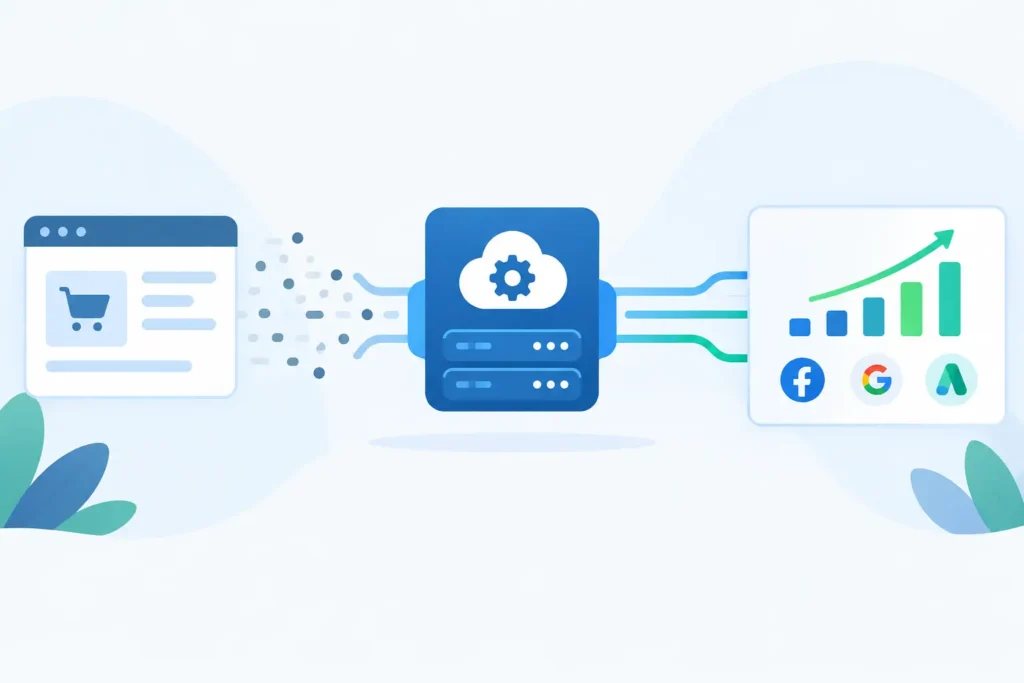
A sale hits your bank account, but Meta, Google, or another ad platform never sees it. Or worse, the platform sees a different sale, credits itself, and learns from the wrong customer. That is the financial reason conversion API implementation matters. It is not a technical box to check. It can make it easier to compare recorded business outcomes with the events available to advertising platforms, without guaranteeing complete or causal attribution.
When tracking is incomplete, campaign comparisons can become less reliable. That can contribute to premature budget changes, although a reporting discrepancy does not by itself establish that a campaign is profitable or that an ad platform is wrong.
What conversion API implementation actually fixes
A browser pixel depends on a browser completing a series of actions: loading the page, accepting the script, allowing cookies, remaining connected, and sending the event without an ad blocker or privacy rule interrupting it. That used to be inconvenient. Now it is a routine source of missing conversions.
A conversion API sends events from your server or tracking layer directly to the ad platform. Instead of asking a customer’s browser to report a purchase, your system reports it after the order, qualified lead, booked call, or subscription payment is recorded.
That shift gives you a more durable delivery path, but it does not make every attribution problem disappear. A conversion API cannot identify a visitor you never captured, repair a broken checkout integration, or make an ad platform’s self-reported attribution objective. When configured correctly and used with appropriate consent, it may reduce some missing-event problems and improve the data available for measurement or optimization; results vary by platform and setup.
The practical goal is simple: preserve the real click-to-conversion record in first-party infrastructure, then send the right conversion signal to each platform. The platform receives an event. Your records can help reconcile attribution claims against actual transactions, but a matched click or attributed sale does not by itself prove that advertising caused an incremental purchase.
The expensive mistake: treating server-side events as a pixel replacement
The browser pixel and conversion API should usually work together. The pixel can send fast, useful browser-side signals such as page views, product views, add-to-cart actions, and early checkout steps. The server-side event confirms the transaction or lead when your own system has proof it happened.
The trap is sending both versions without deduplication. If the browser reports a purchase and the server reports the same purchase as a separate event, the platform can count two conversions. Suddenly, reported CPA falls and ROAS rises, but only because the dashboard is double-counting revenue.
Deduplication rules vary by platform and conversion setup. For Meta Pixel and Conversions API, matching event names and event IDs help identify duplicate browser and server reports of the same action. Google Ads uses transaction IDs for relevant conversion actions and data-source configurations. Follow the platform’s current documentation and test that a single business outcome is counted appropriately. This is an important implementation detail: without suitable deduplication, measurement can become less trustworthy. For platform-specific requirements, consult Meta’s archived official Conversions API schema and Google Ads transaction-ID guidance.
Start with the conversion events that move budget
Do not begin by piping every possible website interaction into an API. More events do not automatically mean better optimization. A flood of weak signals can distract the algorithm from the action that produces margin.
Start with the events that change a media-buying decision. For an ecommerce brand, that may be completed purchase, first purchase, subscription start, and refunded order. For lead generation, it may be qualified lead, booked appointment, attended call, approved application, and closed revenue.
The distinction matters because a form fill and a qualified lead are not interchangeable. If the platform is trained to find cheap form fills, it will find them. If 70% of those leads are fake, unqualified, or unreachable, low cost per lead is not a win. It is an expensive reporting illusion.
For sales cycles with delayed outcomes, send an initial lead event quickly, then send downstream qualification and revenue events when they occur. That gives the platform early feedback while allowing your own reporting to measure what actually happened after the lead entered the CRM.
Choose one source of truth for each event
Your order system, payment processor, CRM, call-tracking platform, or backend database should determine whether an event is real. The thank-you page alone is rarely enough. Customers can refresh it, payment can fail after redirect, and browser-side tracking can be blocked before the page ever loads.
Assign a clear owner to every key event. For example, your ecommerce platform confirms purchases, your CRM confirms qualified leads, and your call system confirms connected phone sales. When nobody owns the definition, event data slowly turns into a mix of assumptions.
Not sure whether your current tracking can connect clicks to revenue? Take the Free ClickMagick Tracking Assessment to identify potential gaps in your tracking setup.
The data your server needs to preserve
A usable server-side conversion event needs more than a conversion name and timestamp. It needs enough context for event matching, deduplication, and independent attribution.
Capture the click identifiers supplied by ad platforms at the first visit, along with landing page, UTM parameters, referrer, timestamp, campaign data, and a first-party visitor ID. Store those values against the session, lead, cart, or order record. If the customer converts days later, the server still has the original acquisition context.
Where permitted and properly consented, platforms can also use normalized, hashed customer information such as email address or phone number to improve event match quality. Hashing is not a loophole around privacy obligations. You still need a lawful basis, clear consent handling where required, and a process for honoring deletion and opt-out requests.
Send accurate values and currencies for revenue events. Include order IDs or transaction IDs. Preserve the actual event time, not merely the time a nightly integration happened to run. A $300 order reported as a generic purchase with no value, no event ID, and a timestamp from 18 hours later is a weak optimization signal.
A conversion API implementation plan that does not corrupt reporting
Before building anything new, review your current ecommerce, CRM, analytics, and advertising-platform integrations. They may already support the required conversion events, transaction IDs, consent settings, and deduplication. Document genuine gaps before adding software or a custom tracking layer.
First, map your customer journey from first click to final revenue. Identify where click IDs are captured, where leads or orders are created, where qualification happens, and where refunds or cancellations are recorded. This exposes the gaps before engineering starts.
Next, define each event in plain business language. “Qualified lead” should have criteria that sales and marketing both accept. “Purchase” should specify whether it means authorized payment, captured payment, shipped order, or completed trial conversion. Technical teams cannot implement a moving target.
Then build the event flow using identifiers appropriate to each destination and event type. Where Meta receives the same action from browser and server, coordinate its event name and event ID. For Google Ads purchase conversions, use a consistent unique transaction ID where required. Check how existing integrations already handle these identifiers before adding custom reporting paths, and test for duplicate or missing conversions.
After that, test with real but controlled transactions. Confirm that the browser and server versions deduplicate, values match the order system, event timestamps are correct, and the platform receives the intended action. Compare accepted events, matched events, and attributed conversions. Those are different numbers, and confusing them leads to false confidence.
Finally, monitor the implementation after launch. Site releases, checkout changes, CRM field edits, consent-banner updates, and new funnel pages can quietly break tracking. Watch event volume, match quality, duplicate rates, missing click IDs, revenue variance, and the gap between platform-reported conversions and your first-party records.
Do not hand your source of truth back to the ad platform
A better event pipeline may provide more useful inputs for ad-platform measurement and optimization. It does not establish incrementality, channel credit, or profitability on its own. Measuring causal impact generally requires an appropriate experiment or other incrementality analysis; Google’s Conversion Lift explanation outlines one such approach.
Platforms use attribution windows, modeled conversions, view-through credit, and rules designed to show their contribution. That is useful for operating campaigns, but it is not neutral accounting. If Meta says it generated 120 purchases and Google says it generated 110 from the same 150 total orders, neither dashboard can be your final answer.
Keep a first-party record that ties each sale to the original click, landing page, traffic source, and downstream revenue. Reconcile platform claims against actual orders, refunds, repeat purchases, call outcomes, and margin. Use ad dashboards to manage delivery. Use your own data to decide what deserves more money.
Better signals should produce better decisions
The potential value of conversion API work is not an impressive technical diagram. It is more dependable evidence for decisions such as whether to investigate a campaign, improve a landing page, or revisit an audience. Better event delivery alone does not guarantee stronger advertising performance.
If your server-side events only make platform numbers look better, you have not solved the problem. The objective is a measurement setup that preserves relevant, permissible evidence behind reported results, helping you make more informed budget decisions while acknowledging attribution uncertainty.
Not sure where your tracking is breaking down?
Take the Free ClickMagick Tracking Assessment to identify potential gaps in your current tracking setup.