How to Recover Lost Conversions From Your Funnel
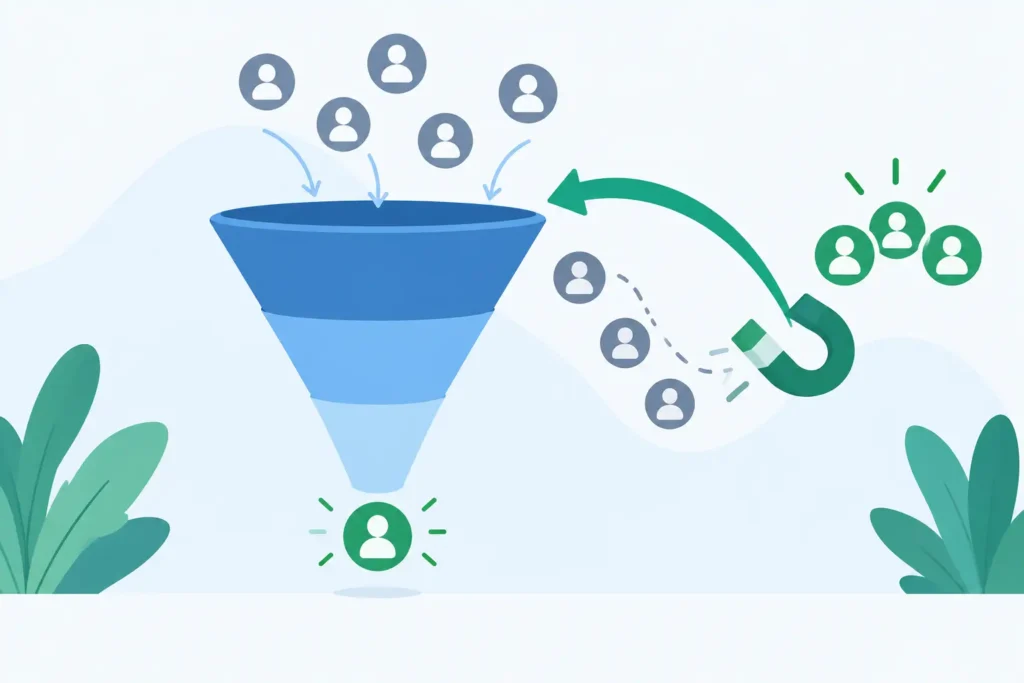
A campaign can look unprofitable while quietly producing sales you never connect back to the click. That is the real problem behind how to recover lost conversions: some conversions are genuinely abandoned, but others are completed and simply missing from your reports.
Treating every reporting gap as a funnel problem leads to bad decisions. Winners get switched off. Losers get more budget. And platform algorithms learn from incomplete conversion signals.
Recovering conversions starts with separating what was lost from what was merely unmeasured. Then you can fix the highest-value failure points without adding software you do not need.
Start With the Conversion You Can Actually Prove
Before changing a landing page or increasing a retargeting budget, reconcile three numbers for the same date range: ad-platform conversions, analytics conversions, and backend orders or qualified leads.
Backend revenue is usually the closest thing to a source of truth, assuming refunds, duplicate orders, canceled leads, and offline sales are handled consistently. If your store records 100 paid orders but your ad dashboard sees 62, you do not automatically have a 38-order attribution problem. Some may be organic, repeat purchases, direct visits, or customers who first clicked an ad days earlier.
But a large, growing, or channel-specific gap deserves investigation. Look for patterns rather than demanding perfect agreement. Browser restrictions, consent choices, cross-device behavior, delayed purchases, and blocked scripts make perfect attribution unrealistic for many businesses.
The goal is not a magical 100% match rate. It is numbers you can bet budget on.
Find Where Conversions Are Being Lost
There are two different leaks: measurement leaks and customer-experience leaks. They often happen at the same time, which is why teams waste weeks fixing the wrong one.
Measurement leaks hide revenue from your reports
A measurement leak occurs when a buyer completes the desired action but the campaign, click, or event is not properly recorded. Common causes include missing UTM parameters, redirect chains that strip identifiers, pixel scripts that fail to load, thank-you pages that do not fire, and checkout domains that break session continuity.
Privacy restrictions create another major blind spot. A browser may block or limit a third-party cookie. A customer might click an ad on a phone, research later on a laptop, and buy there. The sale happened, but the click-to-conversion chain did not survive.
Lead generation has its own version of this issue. A form submission may fire, while the lead is later qualified or closed in a CRM with no campaign data attached. Your ad account claims a lead. Your sales team reports revenue. Nobody can confidently connect the two.
First-party tracking and server-side event delivery can reduce some of these gaps because they are less dependent on a browser loading every tag perfectly. They are not a cure for cross-device identity, consent rules, bad implementation, or incomplete CRM data. Verify what events are sent, when they are sent, and whether deduplication is working before assuming server-side tracking fixed anything.
Experience leaks stop buyers before they convert
If tracking appears sound, inspect the path from click to purchase. Start with the highest-intent stages: product page, cart, checkout, booking calendar, application form, or payment page.
A sharp drop after an ad click may point to message mismatch, slow load time, weak mobile layout, unexpected shipping costs, or a landing page that asks for too much too soon. A sharp drop at checkout may indicate payment failures, forced account creation, limited payment options, or coupon-code hunting.
Do not rely on a single aggregate conversion rate. Segment it by device, traffic source, campaign, landing page, geography, and new versus returning visitors. A 3% sitewide conversion rate can hide a mobile checkout that converts at half the desktop rate or a single paid campaign sending low-intent traffic.
Fix the Measurement Foundation First
For a practical checklist to distinguish missing conversion events from expected reporting differences, consult our free Independent Guide to Ad Tracking & Attribution.
You cannot recover lost conversions reliably if every channel uses a different naming convention and every report tells a different story. Build a simple chain from ad click to business outcome.
Not sure whether your current tracking can connect clicks to revenue? Take the Free ClickMagick Tracking Assessment to identify potential gaps in your tracking setup.
At minimum, preserve campaign, source, medium, creative, and click identifiers wherever policy and consent requirements allow. Make sure redirects retain relevant parameters. Confirm that each landing page, form, checkout, and thank-you page is covered by testing, not assumption.
For ecommerce, test a real purchase using a controlled order and verify that the recorded revenue, currency, order ID, and product details are correct. For lead generation, submit a test lead and follow it into the CRM. Confirm that the original source data stays attached when the lead is qualified, booked, sold, refunded, or disqualified.
Then check for duplicate events. A browser pixel and server event can both be useful, but only if the platform can identify them as the same conversion. Otherwise, your reports inflate performance and you start scaling fiction.
Use a written event map. It should state which event matters, where it fires, which system owns the data, and how it is validated. This is not paperwork for its own sake. It prevents an agency, developer, and media buyer from each assuming someone else checked the tracking.
Recover Abandoned Intent Without Pretending It Is Revenue
Once measurement is credible, recover the customers who showed intent but did not finish. The right tactic depends on the business model and buying cycle.
For ecommerce, cart and checkout recovery can work well when the message addresses a real barrier: stock uncertainty, shipping timing, product questions, or payment hesitation. A generic discount may increase completed orders, but it can also train customers to wait for one and reduce margin. Test incentives against non-discount reminders rather than treating a coupon as the default answer.
For higher-ticket services, the recovery path may be a faster follow-up, a clearer booking page, or a short qualification sequence. A lead who abandons a long form may not need more retargeting. They may need fewer fields, a stronger reason to submit, or proof that someone will respond promptly.
Retargeting deserves the same skepticism as prospecting. Exclude recent purchasers, suppress low-quality placements where possible, cap frequency, and measure incremental lift rather than accepting platform-reported view-through conversions at face value. Retargeting can capture demand you would have received anyway.
Use Delayed Conversion Data Before Cutting Spend
Some campaigns look weak because your reporting window is too short. A buyer may click today, compare options for a week, and convert after your team already paused the campaign.
Calculate the lag between first click and conversion for each major offer and channel. If 40% of purchases arrive after day seven, judging campaigns after three days will systematically punish longer-consideration traffic. This is especially relevant for higher-priced ecommerce, B2B lead generation, subscriptions, and affiliate offers.
Create a reporting view that separates same-day results from matured results. You still need early indicators to manage spend, but they should be leading indicators, not a false declaration of failure.
This is also where multi-touch reporting can help. Last-click attribution is straightforward, but it often gives all credit to branded search, email, or retargeting after paid social or nonbrand search created the initial demand. Multi-touch models add context, not certainty. Use them to challenge simplistic budget decisions, not to manufacture precision.
Stop Paying for Clicks That Were Never Likely to Convert
Not every lost conversion is recoverable. Some clicks were bots, competitors, accidental taps, incentivized traffic, or users with no buying intent. Counting them as a conversion-rate problem leads to endless landing-page tests against traffic that was never viable.
Watch for suspicious patterns: unusually high click volume with near-zero engagement, repeated visits from the same IP range, impossible session durations, abnormally high conversion rates from a placement with weak downstream revenue, and form submissions with disposable or malformed contact details.
The action depends on the evidence. You may exclude placements, tighten targeting, add bot filtering, require better lead validation, or adjust rules for suspicious traffic. Avoid broad exclusions based on a hunch. Aggressive filtering can remove legitimate prospects and make your data less representative.
When Additional Tracking Infrastructure Is Worth It
Your existing analytics, ad pixels, ecommerce platform, and CRM may be enough if they reliably connect major campaigns to verified outcomes, preserve key identifiers, and give your team consistent reporting. Do not buy another tool because a dashboard looks impressive.
Additional tracking infrastructure becomes easier to justify when you manage several traffic sources, use redirects or affiliate links, need first-party click tracking, struggle with conversion attribution across funnels, or need clearer reporting on bots and low-quality clicks. In those cases, a tool such as ClickMagick may be worth evaluating because it can centralize link tracking and conversion reporting. Verify the plan limits, implementation work, integrations, and whether it solves your specific gap before paying for it.
The right move is rarely to chase every missing conversion. Fix the leak that changes a real decision first: the campaign you are about to pause, the audience you are about to scale, or the checkout step costing verified sales. Better attribution earns its value when it prevents a bad budget decision.
Not sure where your tracking is breaking down?
Take the Free ClickMagick Tracking Assessment to identify potential gaps in your current tracking setup.