How to Stop Wasted Advertising Spend Before It Scales
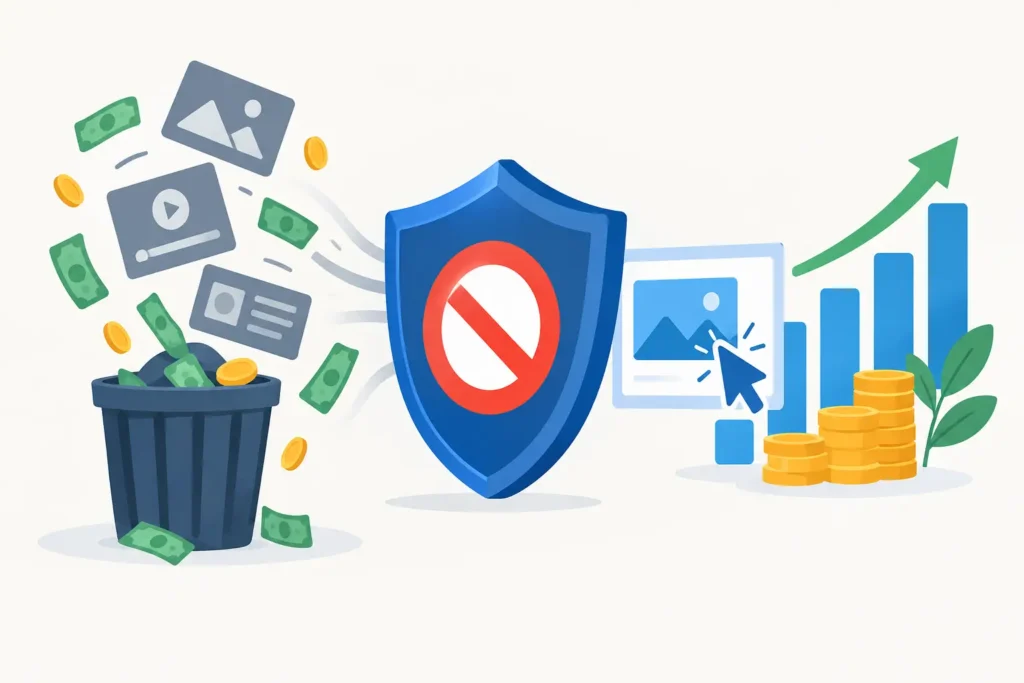
A campaign can look unprofitable in Meta, break even in Google Ads, and quietly produce your best customers in the store backend. Those differences can complicate budget decisions. A campaign may be undercredited or overcredited, but conflicting reports alone do not establish which campaign is profitable or whether spend is being wasted.
The problem is rarely one bad metric. It is the gap between the click, the customer journey, and the revenue record used to make your next budget decision. If that gap is large enough, a lower CPA can be a trap, a strong ROAS can be overstated, and an apparently dead campaign can be doing more work than the platform takes credit for.
You do not need another dashboard because dashboards are fashionable. You need to identify where measurement breaks, decide whether that break changes a real media-buying decision, and fix the highest-cost gaps first.
Wasted spend starts before the conversion report
Most advertisers define wasted spend as money paid for clicks that do not convert. That is only part of the picture. Spend can also be misallocated when reporting gaps lead advertisers to restrict a potentially valuable audience, reward a low-quality traffic source, or rely on duplicate conversion events. Confirm the underlying business outcomes before treating these scenarios as proven waste.
Ad platforms report from their own perspective. They observe impressions, clicks, some view-through activity, and the conversion events they can match. Your ecommerce platform, CRM, call system, checkout, or affiliate network may see a different outcome. Neither view is automatically complete.
Browser privacy restrictions, consent choices, ad blockers, cookie expiration, cross-device journeys, delayed purchases, and broken UTM parameters can all reduce visibility. A user might click an ad on a phone, return through email on a laptop, and buy three days later. The original platform may claim none of the revenue, some of it, or more of it than its attribution rules justify.
That does not mean platform reporting is useless. It means it should not be the only number you bet budget on.
Find the leak before buying more technology
Start with a simple question: which decisions are currently made with incomplete evidence? Be specific. “Attribution is messy” is not a useful diagnosis. “We cannot tell which paid search terms produce second purchases” is.
Compare the path from ad click to recorded revenue. Look for discrepancies between ad-platform clicks, landing-page sessions, checkout starts, purchases, and confirmed net revenue. Some difference is normal. A large or growing difference deserves an explanation before you increase spend.
Pay particular attention to these four failure points:
- Source loss: UTMs are missing, overwritten, inconsistently named, or lost during redirects and cross-domain checkout flows.
- Conversion loss: Pixel events fail to fire, consent rules suppress events, or browser-side tracking misses users who complete the purchase.
- Revenue distortion: Refunds, canceled orders, taxes, shipping, subscription churn, and duplicate events are excluded or counted incorrectly.
- Traffic quality loss: Bots, accidental clicks, competitor activity, and low-intent placements inflate visits without creating commercial value.
The goal is not to force every report to match exactly. Different systems use different attribution windows, time zones, and definitions. The goal is to understand the variance well enough to avoid false decisions.
For example, if paid social reports 40 purchases but your order system shows 55 orders carrying paid-social source data, the missing 15 may matter. If they are low-value first orders that never repeat, the urgency is lower. If they are your highest-margin products or the beginning of a profitable subscription cohort, restricting that campaign could be expensive.
Stop wasted advertising spend by protecting the click record
The click is the starting point of attribution. If you cannot reliably identify the source, campaign, ad, keyword, placement, or affiliate that generated a visitor, every downstream report becomes weaker.
Use a consistent UTM taxonomy across platforms. Keep naming short enough that humans will follow it, but structured enough to separate the decisions you need to make. Campaign names should not require a forensic investigation six months later. If creative, audience, offer, and geography all affect budget decisions, build identifiers that preserve those distinctions.
Then test the actual journey. Click a live ad or controlled test URL. Confirm that parameters survive every redirect, landing-page variation, cart step, payment provider, and thank-you page. This sounds basic because it is basic. It is also routinely missed after a landing-page rebuild, checkout update, domain migration, or agency handoff.
First-party tracking can help retain identifiers under conditions where browser-based pixels are less reliable. Server-side conversion tracking can also send conversion events from your systems rather than relying entirely on a browser confirmation. But neither is magic. Server-side events still need correct identifiers, event names, values, deduplication rules, consent handling, and proper implementation. A badly configured server event can create cleaner-looking bad data.
Not sure whether your current tracking can connect clicks to revenue? Take the Free ClickMagick Tracking Assessment to identify potential gaps in your tracking setup.
Separate reporting accuracy from optimization signals
There are two related but different jobs: measuring business results and feeding platforms signals they can use for delivery optimization.
For reporting, you may want a conservative revenue view that accounts for refunds, delayed conversions, repeat purchases, and multiple touches. For optimization, a platform may need a timely event signal such as qualified lead, checkout, or purchase. Waiting 30 days for final customer value may be too slow for daily bidding decisions.
The answer is often not one perfect event. It is a practical event hierarchy. Send reliable, timely events back to the platform where appropriate, while keeping an independent revenue report for budget allocation. This lets algorithms learn from better signals without requiring you to accept their self-reported ROAS as the final verdict.
Event match quality matters here. If the platform cannot associate a server-side purchase with the earlier ad interaction, the event may be less useful for optimization. Improve matching only with data you are permitted to collect and transmit, and make sure your privacy disclosures and consent processes support the setup. Better measurement is not a reason to ignore compliance.
Filter traffic before it trains the wrong lesson
Not every click deserves the same level of trust. Automated traffic can inflate clicks, engagement, and even shallow conversion events. Click fraud and competitor clicks are real concerns in some channels and categories, but do not label every disappointing campaign as fraud without evidence.
Look for patterns: repeated visits from the same network, implausibly fast sessions, abnormal geography, identical device behavior, high click volume with zero progression beyond the landing page, or sudden changes concentrated in a placement or publisher. Compare these patterns against normal campaign behavior and backend outcomes.
The practical question is whether filtering or blocking changes a budget decision. A small amount of bot traffic may not justify a complex project. A traffic source consuming a meaningful share of spend while producing no verified downstream value does.
Use attribution to make fewer, better changes
Attribution becomes useful when it produces an action. Do not wait for perfect certainty before acting, but do require enough evidence to avoid reacting to noise.
A useful operating rhythm is to review daily delivery signals, weekly source and campaign quality, and monthly customer value or cohort results. Daily reports help catch broken tracking, overspend, and obvious deterioration. Weekly reviews give conversion lag time to settle. Monthly analysis shows whether the “cheap” customers actually become valuable customers.
This is where multi-touch attribution can be helpful, especially for longer consideration cycles. A first-click model may reveal prospecting campaigns that introduce eventual buyers. A last-click model may show the final channel that closes them. Neither should automatically receive all the credit. Use models as lenses, not as a machine that declares one indisputable truth.
For many smaller accounts, clean source tracking, accurate purchase values, and a disciplined comparison against backend revenue will solve more than an elaborate attribution model. Complexity is justified only when it changes how you allocate meaningful spend.
When an independent tracker is worth considering
Your existing stack may be enough if UTMs persist, conversions reconcile reasonably well, your backend captures net revenue, and you can trace important decisions back to credible data. Do not buy tracking software just because platform dashboards disagree. Some disagreement is inherent.
Additional tracking infrastructure becomes more compelling when you manage multiple traffic sources, redirects, offers, affiliates, funnels, or domains and cannot reliably connect click-level data to downstream outcomes. It can also be useful when bot filtering, conversion tracking, traffic routing, or independent campaign reporting currently require spreadsheets and manual workarounds.
ClickMagick is one option built around link tracking, conversion tracking, traffic-quality controls, and campaign-level reporting. Before treating it as the answer, verify that its plan limits, integrations, data retention, implementation requirements, and reporting model fit your funnel. It will not repair a checkout that fails to pass order data, replace a CRM with incomplete records, or prove causation where customer journeys remain ambiguous.
The right test is simple: identify the reporting gap, estimate the spend or decision risk attached to it, and confirm that the tool closes that specific gap with an implementation your team will maintain.
Better advertising decisions do not come from chasing a prettier ROAS number. They come from protecting the evidence between the click and the revenue, then giving more budget only to results you can defend.
Not sure where your tracking is breaking down?
Take the Free ClickMagick Tracking Assessment to identify potential gaps in your current tracking setup.